Wednesday, April 26, 2017

Gecko Time: The Palawan Gecko

I don't think I'd ever be able to overcome my fear of geckos. They're just weird-looking reptiles, with knob-like bumps all over their body. Whenever I see them, I feel that they are looking at me and ready to jump at me and attack me. I heard that when a gecko accidentally lands on your skin, they are hard to rid of.

They have been showing themselves to me for two consecutive days now. Huhuhu... Anyway, here are some things I've observed from them:

1. Most house geckos are nocturnal, meaning they go out of their "houses" just when you're about to sleep. Aren't they sweet? Perhaps they just want to bid me goodnight. 

2. Geckos like being with humans. Some of our neighbors and even my cousin believes that the arrival of a gecko into a home is a sign of good luck. Not a believer though.

3. In the Philippines, they are called them "tuko," and that's because of the strange [tuk'ohh] sound they make. According to some articles I've read (yeah, I've started reading about them!), geckos are considered the most vocal reptiles, and only the male geckos make a sound. They make this chirping sound to ward off predators, to attract females or to interact with others.

4. They come in different colors. So far, I've seen two humongous geckos at home, but I believe there's a third one from the neighboring lot right beside our home. He makes a different sound than the ones we have at home.
Palawan Gecko
This is Blue. He's got blue speckles all over his bumpy body. 

Palawan Gecko

Palawan Gecko
This is Red. He's bigger than Blue. Just look at the nails on its feet. Scary creature!
5. Another interesting thing I found out about geckos is that they lick their eyes to keep them clean and lubricated. Geckos don't have eyelids so they use their tongues to lick their eyes. Okay, that creeped me out.

I hope you enjoyed the pictures. And if you're ever wondering who took the pictures, I didn't. My dad did. :P

Tuesday, April 25, 2017

How To Transplant Moringa Seedlings

The moringa oleifera (malunggay) plant is a fast-growing tree that can grow up to 3 meters in its first year. Moringa trees grow well in the tropical climate of the Philippines.

We have started transplanting the young moringa plants that we have grown in our nursery. By now the moringa plants are 4 to 6 weeks old and some are already more than 30 cm in height. Before transplanting the moringa seedlings, we brought the seedlings outside the nursery to expose them gradually to direct sunlight.
moringa-plant-for-transplanting
These young moringa plants are ready for transplanting!

moringa-plant-for-transplanting
We added vermicompost and mixed it with the fresh topsoil around the hole. We then used this mixture to fill the pit. Fresh topsoil has beneficial microbes that promotes effective root growth.

We planted each moringa seedling at a distance of about 2m x 2m to encourage good leaf foliage. Once we have planted all our moringa seedlings and seeds, we might be able to plant other crops in between rows.

After transplanting the moringa seedlings, we water them three times a day, especially since the rainy season has not started yet. Water management is important for the survival, growth, and development of the moringa seedlings.

Thursday, April 20, 2017

Malunggay Life Goes Organic! - Day 3

It's Day 3, and it's more hands-on training on organic farming. We arrived earlier this time and saw that the staff was already busy preparing the materials we will be using to make organic fertilizer and pesticides. This was much more fun than yesterday's training because we actually learned the ingredients we needed to make our own organic fertilizers and pesticides.

moringa-organic-farming-seminar
Everyone was busy preparing the ingredients to make organic fertilizer tea and pesticides.

moringa-organic-farming-seminar
All smiles before we start with today's organic farming hands-on training. :)

moringa-organic-farming-seminar
Ms. Gene, the expert in organic farming, explaining something about some of the ingredients we used today.

moringa-organic-farming-seminar
Our workers trying their hands at making the first organic fertilizer with the assistance of Ms. Gene.

moringa-organic-farming-seminar
We keep our hands busy preparing other organic fertilizers.

moringa-organic-farming-seminar
Preparing fermented fruit juice. That's not juice for drinking, but a kind of organic fertilizer.

trichoderma-biofungicide
Our loot for the day. The DA office gave each participant two free bottles of trichoderma. Since four of us participated in their organic farming seminar, we got 8 bottles. Yay!!
We were tired, but glad that we requested for this organic farming seminar and certification. The seminar was all informative and fun, but most of all, it was FREE, and they promised they'd give us a certificate of attendance. Ms. Cacal and Ms. Gene told us that once the Palawan Agricultural Center receives their organic farming certification, they will start collecting fees for their seminars. They are expecting for their certification within the 2nd quarter of this year. I would be glad and excited to attend more seminars from them if they will offer more this year and the coming years.  

Wednesday, April 19, 2017

Malunggay Life Goes Organic! - Day 2

We spent the whole day today attending the second day of the seminar/hands-on training on organic farming and certification. We have been advised that the entire morning will be a lecture/discussion about organic farming, while the afternoon as well as Day 3 will be more hands-on training.


moringa-organic-farming-seminar
Registration started at 10AM. There were already other participants when we arrived. We were not informed that the schedule had been moved to 9AM :(
moringa-organic-farming-seminar
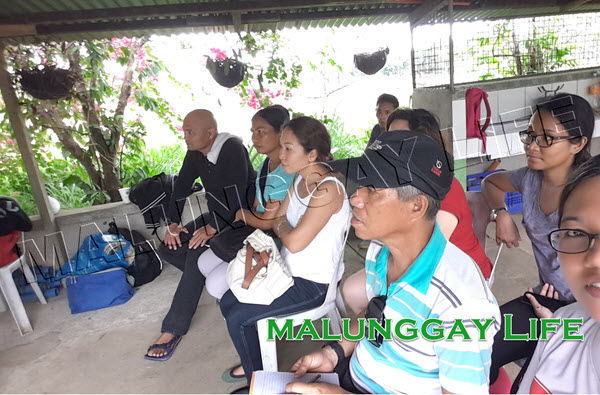
Our speaker, Ms. Gene, the lady in pink shirt, started with a lecture about organic farming and why go organic, general guidelines about the use of fertilizers, intercropping, natural pesticides, etc.
moringa-organic-farming-seminar
Here, she talks about starting a simple, mini aquaponics system.
moringa-organic-farming-seminar
Participants in serious mode ^^
moringa-organic-farming-seminar
Mixing soil and carbonized rice hull and putting tomato and lettuce seeds in seed trays
moringa-organic-farming-seminar
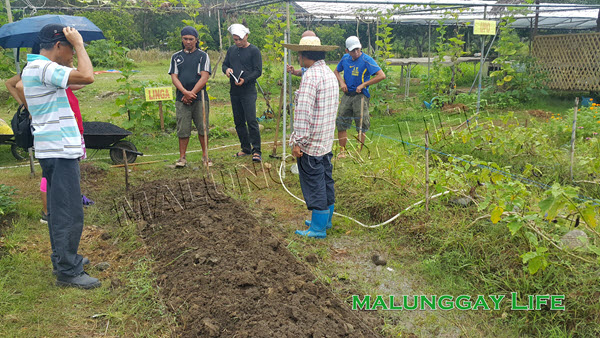
Time to sweat it out~ It was drizzling, AND it was the perfect time to do some plowin' and tillin'~

moringa-organic-farming-seminar

moringa-organic-farming-seminar
Mixing some manure and carbonized rice hull
moringa-organic-farming-seminar
Covering the plot with plastic mulch


moringa-organic-farming-seminar
Making some compost. Have to remember "N-P-K": "N" is for Nitrogen, "P" is for Phosphorus, and "K" is for Potassium. 

moringa-organic-farming-seminar
Making carbonized rice hull

Friday, April 14, 2017

Malunggay Life Goes Organic! - Day 1

The Department of Agriculture (DA) has been very accommodating to us since we shared with them our interest in moringa / malunggay farming and production. We want to go organic with our crops, especially with our moringa seeds and leaves, so we paid the DA office a visit to request for organic seminar and certification.
Department-of-Agriculture-Palawan
The Department of Agriculture's office in Palawan is located in Puerto Princesa. It is also their Research and Experiment Station. 
moringa-organic-farming-seminar
Upon entering, you will see the Department of Agriculture's garden filled will various kinds of vegetable crops, fruit trees, and other flowering plants.
They call this "Edible Landscaping," and indeed, almost everything that is planted in the garden is edible. I would have loved to harvest some vegetables to cook some pinakbet!


moringa-organic-farming-seminar
Hmmm... makes me want to sing "Bahay Kubo"
Ms. Librada Fuertes, the current OIC and head of the Research and Development of DA-Palawan Agricultural Experiment Station was very accommodating as she granted our request for organic farming seminar. She referred me to Ms. Milagros Cacal, the head of the Palawan Agricultural Center, as her office is the one in charge of conducting organic farming seminar and certification. 
Palawan-Agricultural-Center
The Palawan Agricultural Center is located in Bgy. Irawan, about 14 kms. from Puerto Princesa City.

moringa-organic-farming-seminar
Yours truly listening intently to Ms. Cacal, as she gives us an orientation about organic farming and certification requirements. 

moringa-organic-farming-seminar
The workers and Dad also busy listening and writing notes about Ms. Cacal's short but informative lecture.
We will be back tomorrow for the actual seminar and hands-on training. Can't wait!